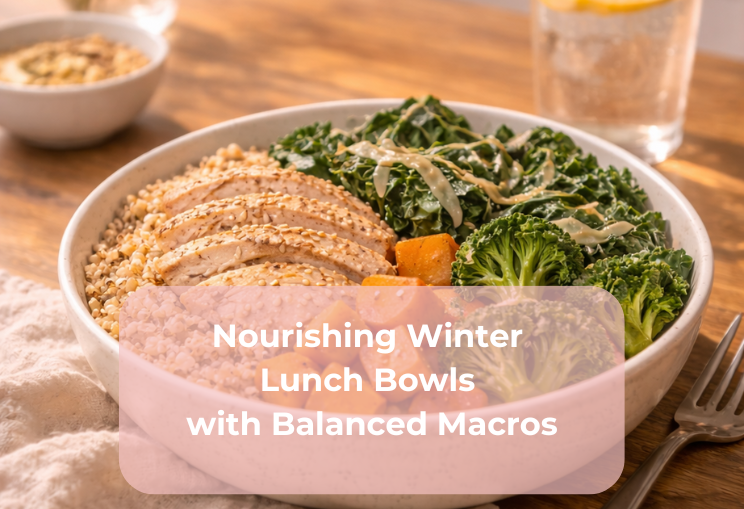
Why Balanced Lunches Matter in Winter
Cold weather often increases cravings for comfort foods — which makes lunch an important anchor for steady energy and focus through the afternoon. A well-balanced lunch bowl provides warmth, satisfaction, and sustained fuel without heaviness.
Balanced macros help support stable blood sugar, mood, and productivity.
What “Balanced Macros” Really Means
A balanced lunch bowl typically includes:
- Protein for satiety and muscle support
- Carbohydrates for steady energy
- Healthy fats for fullness and flavour
- Fibre-rich vegetables for digestion
The goal isn’t precision — it’s balance you can repeat daily.
Nourishing Winter Lunch Bowl Ideas
1. Roasted Veg & Protein Grain Bowls
Brown rice, quinoa, or lentils topped with roasted root vegetables and chicken, tofu, or fish.
2. Warm Bean & Greens Bowls
Cannellini or chickpeas with sautéed kale or spinach, olive oil, and herbs.
3. Sweet Potato & Protein Bowls
Baked sweet potato paired with eggs, turkey, or tempeh for comfort and balance.
4. Soup-Based Lunch Bowls
Hearty vegetable soups with added beans, lentils, or shredded chicken make excellent winter lunches.
Tips for Building a Satisfying Lunch
- Prioritise protein at every meal
- Use cooked vegetables for warmth
- Add healthy fats sparingly
- Eat slowly to support digestion
A nourishing lunch sets the tone for the rest of the day.
🌿 Gentle LiveGood Tie-In (Optional)
Some people like to support daily nutrition by adding LiveGood Super Greens or Super Reds earlier in the day — keeping lunch bowls simple, whole-food based, and naturally satisfying.
Warmth, Nourishment And Steady Energy
Winter lunches don’t need to be heavy to be comforting. Balanced lunch bowls provide warmth, nourishment, and steady energy — helping you stay fuelled without feeling weighed down.
Consistency matters more than perfection.
A Simple Nourishing Gravy to Bring It All Together
Winter lunch bowls often feel more satisfying with a little added moisture. A light, savoury gravy can bring the ingredients together without overpowering the meal or making it heavy.
A simple option is a quick vegetable gravy made by gently heating vegetable stock with a splash of olive oil, a teaspoon of miso or tamari, and a pinch of dried herbs such as thyme or rosemary. Simmer briefly, then thicken lightly with a small amount of cornflour or arrowroot mixed with water. The result is a warm, comforting sauce that adds flavour and hydration to the bowl.
This kind of gravy works beautifully over grains, roasted vegetables, beans, or protein — adding comfort without excess fat or richness.
🌿 Gentle Variation (Optional)
For a slightly deeper flavour, you can blend a spoonful of cooked lentils or white beans into the gravy before heating. This creates a naturally thicker texture while adding plant-based protein and fibre.
Some people also enjoy adding a pinch of warming spices like black pepper or paprika, especially during colder months.