Why Protein Matters More After 50
Protein plays a key role in maintaining muscle strength, balance, and recovery — especially after 50. As we age, the body becomes slightly less efficient at using protein, which means regular, well-timed intake becomes more important than sheer quantity.
The goal isn’t heavy meals — it’s consistent, digestible protein paired with supportive foods.
What Makes a Protein Plate Supportive
Protein-focused plates that work well in midlife tend to include:
- a moderate, high-quality protein source
- cooked vegetables for easier digestion
- gentle carbohydrates for energy
- enough moisture to keep meals comfortable
Balance supports strength far better than extremes.
Protein-Focused Plate Ideas
1. Baked Fish with Soft Vegetables
Salmon, cod, or haddock with steamed greens and olive oil — light, nourishing, and rich in supportive nutrients.
2. Chicken or Turkey with Warm Grains
Served with quinoa or rice and a light sauce or broth to keep the plate moist and satisfying.
3. Eggs with Cooked Vegetables
A simple, versatile option that works well for lunch or early dinner.
4. Plant-Based Protein Bowls
Lentils, beans, or tofu paired with cooked vegetables and herbs for comfort and fullness.
Keeping Protein Plates Easy to Digest
- Choose cooked over raw vegetables
- Use light sauces, broths, or gravies
- Avoid very large portions late in the day
- Eat slowly and without rushing
Comfort supports consistency — and consistency supports strength.
🌿 Gentle LiveGood Tie-In (Optional)
Some people like to support daily protein intake with LiveGood Complete Protein, especially when appetite is lower or meals are lighter. Using a small serving earlier in the day can help evening meals stay simple while still supporting strength.
Steady Nourishment, Thoughtful Protein Intake
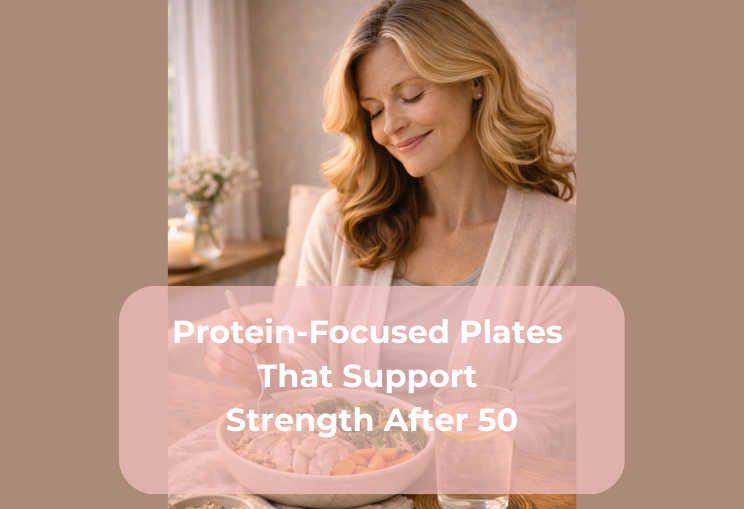
Strength after 50 isn’t built through heavy meals or perfection — it’s built through steady nourishment, thoughtful protein intake, and meals that feel good to eat.
Strong bodies are supported by calm, consistent habits.